Meeting the AI Power Challenge

AI workloads are replacing the naturally smoothed, uncorrelated power profile of traditional cloud computing with massive load swings caused by thousands of synchronized GPUs working in tandem. Legacy power systems cannot handle this volatility.

Close-up of a person’s hand interacting with a tablet displaying a digital graph and data analysis in a dimly lit environment.Hand interacting with a tablet displaying a detailed bar graph and data analytics.

High-Performance AI Power Built for Dynamic Load Behavior

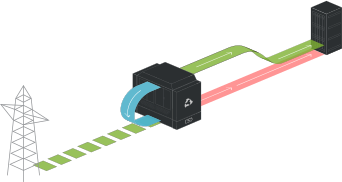
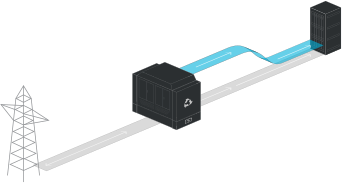
TurboCell’s hybrid DC architecture with direct battery integration actively manages AI loads to reduce stress on critical equipment, optimize performance, and help stabilize the grid.
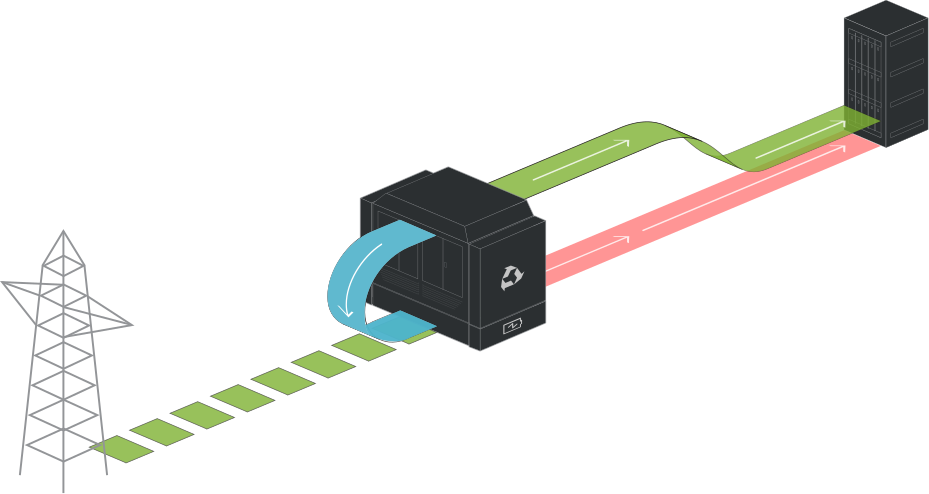
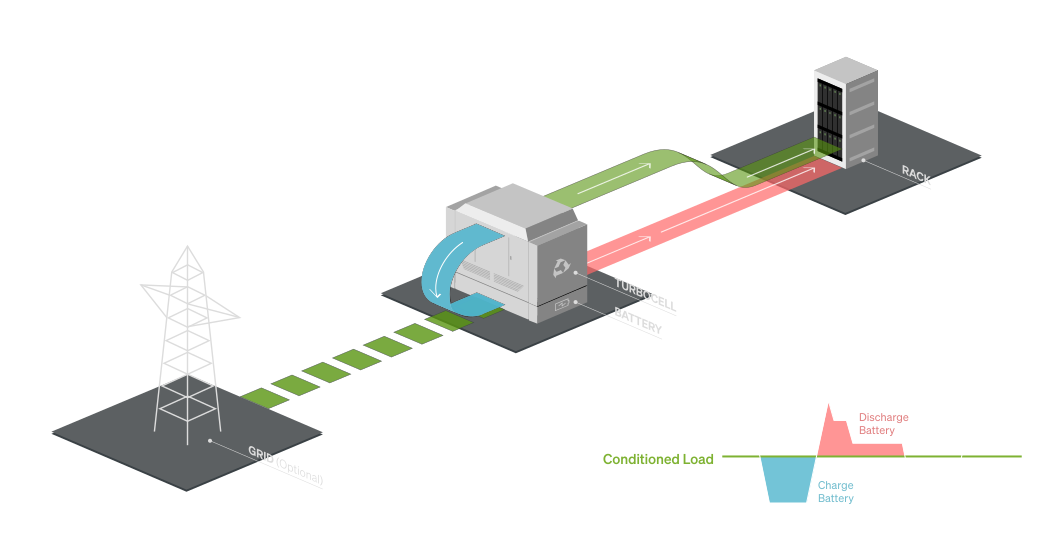
TurboCell provides stable
baseload power
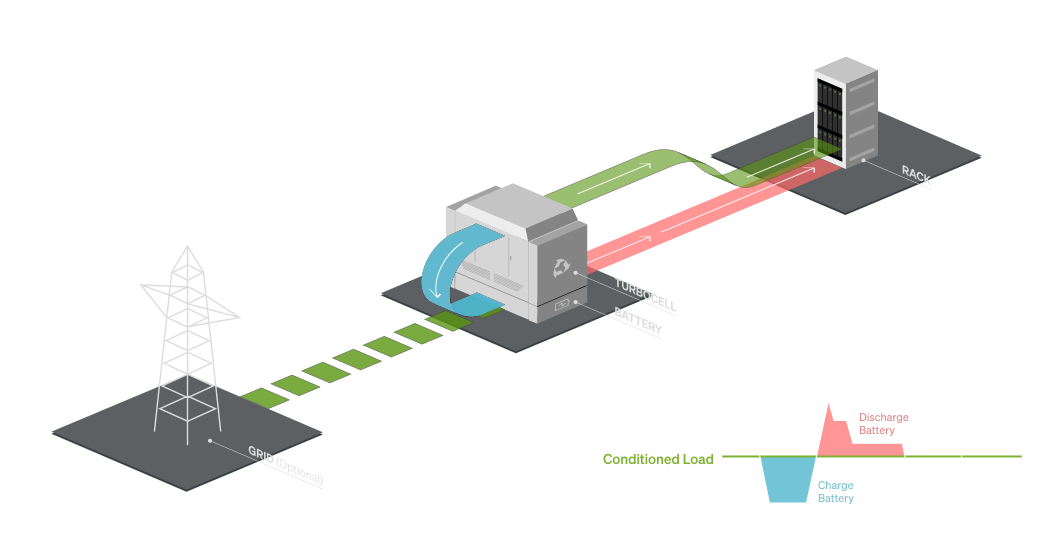
TurboCell discharges
integrated batteries during
load peaks
TurboCell discharges
integrated batteries during
load peaks
TurboCell charges the
integrated battery during
load dips
TurboCell provides stable
baseload power
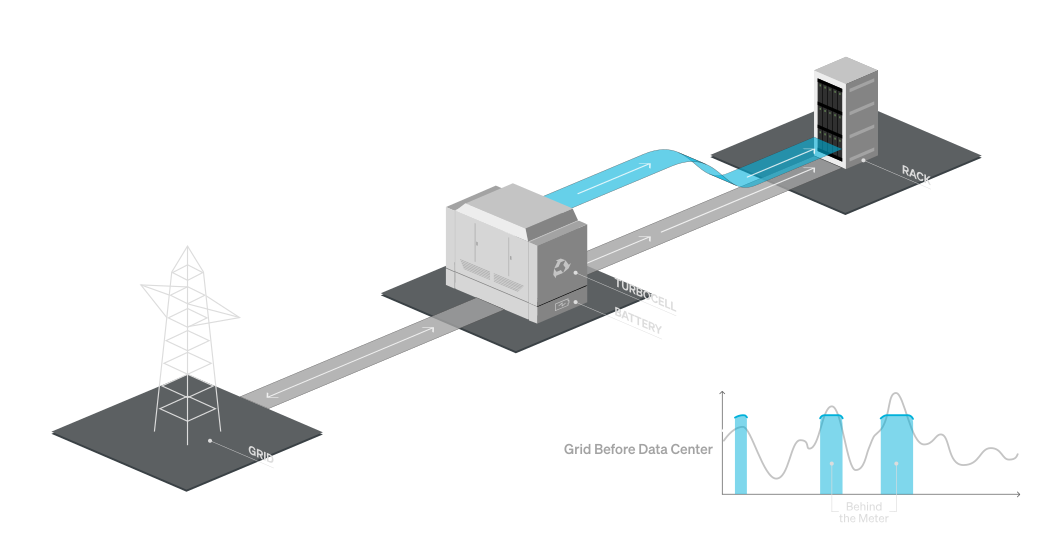
TurboCell supports
behind-the-meter and
grid-connected
configurations

High-performance AI power built for dynamic load behavior

TurboCell’s hybrid DC architecture with direct battery integration actively manages AI loads to reduce stress on critical equipment, optimize performance, and help stabilize the grid.

AI Load Smoothing

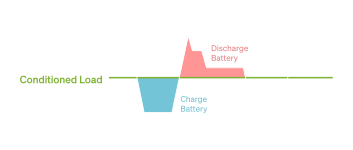
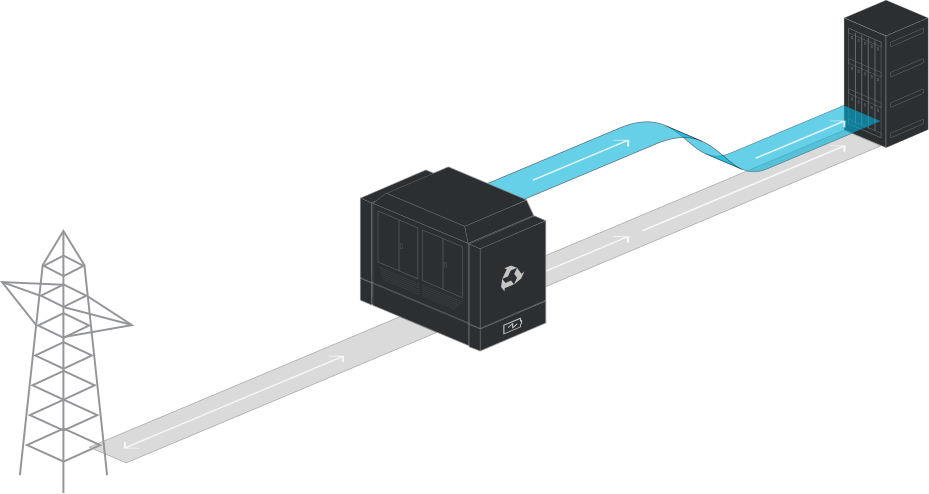
The hybrid system smooths AI loads by discharging the integrated batteries during load peaks and charging batteries with TurboCell power during load dips. This results in a flat conditioned load curve.

AI Load Smoothing

The hybrid system smooths AI loads by discharging the integrated batteries during load peaks and charging batteries with TurboCell power during load dips. This results in a flat conditioned load curve.

Supporting the Grid With Flex Load

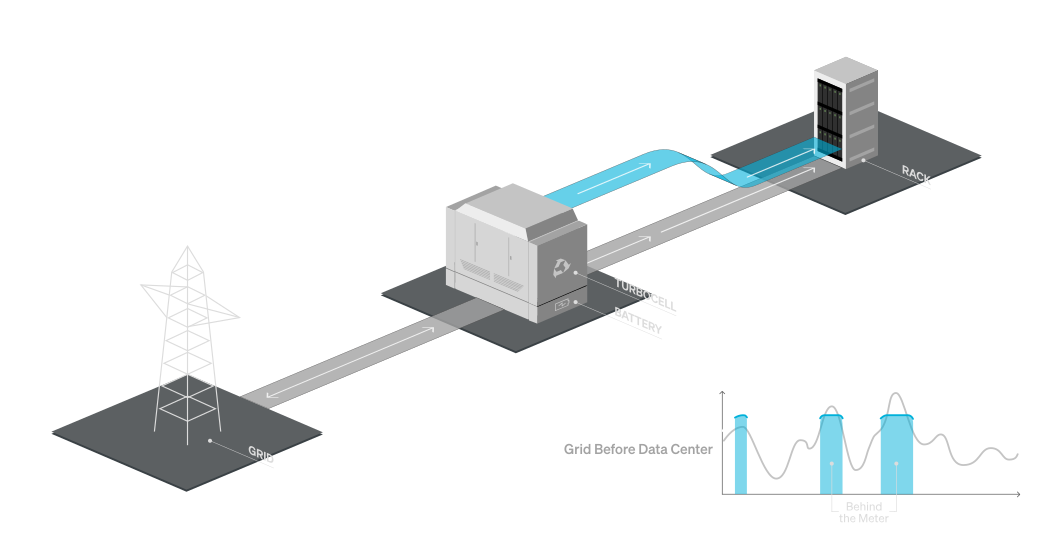
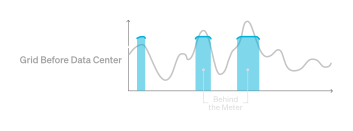
In grid-connected setups, TurboCell supports demand response and seasonal bridging by shifting data-center loads to behind-the-meter power during grid peaks.
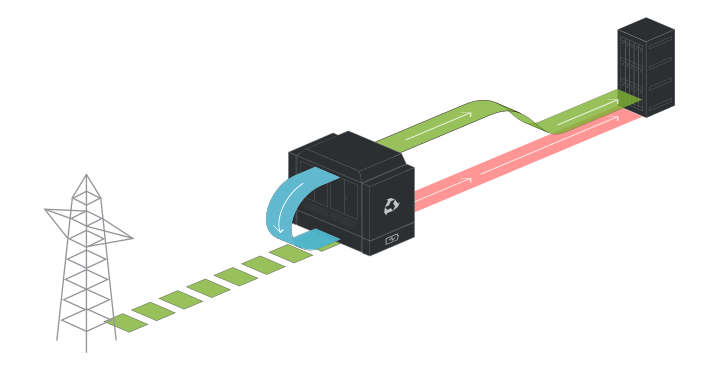
Supporting the Grid With Flex Load

In grid-connected setups, TurboCell supports demand response and seasonal bridging by shifting data-center loads to behind-the-meter power during grid peaks.
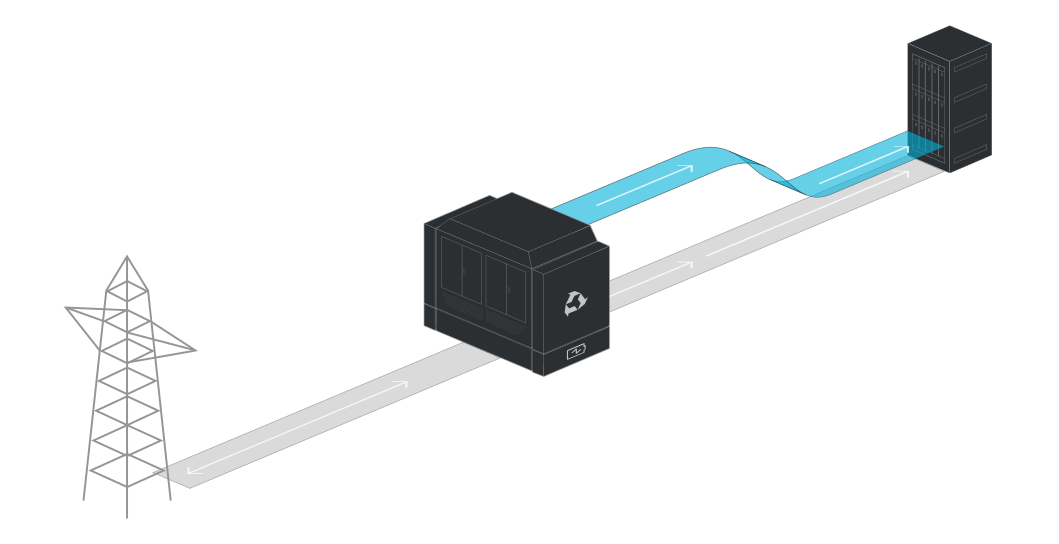
Managing Power Quality
AI causes power oscillations and harmonics

Synchronized AI clusters cause sharp power oscillations that amplify harmonics and increase total harmonic distortion, voltage sags and frequency variations. This can cause nuisance breaker trips and physical damage to onsite generation assets and grid infrastructure.

Large turbine systems amplify harmonics

Centralized electrical architectures made up of large turbines tend to further amplify triplen harmonics with long electrical paths and shared neutrals and are susceptible to breakage when subjected to harmonics and aggressive transients.

Energy storage can help stabilize power

Batteries and supercapacitors can provide harmonic filtering and transient voltage stabilization, but current placement strategies involve notable trade-offs. Rack-level designs offer strong local performance but are costly in hardware, compute space and fire-risk mitigation. Upstream BESS provide bulk capacitance but expand the electrical failure domain and increase construction time, capital expense and supply chain risk.
Managing Power Quality
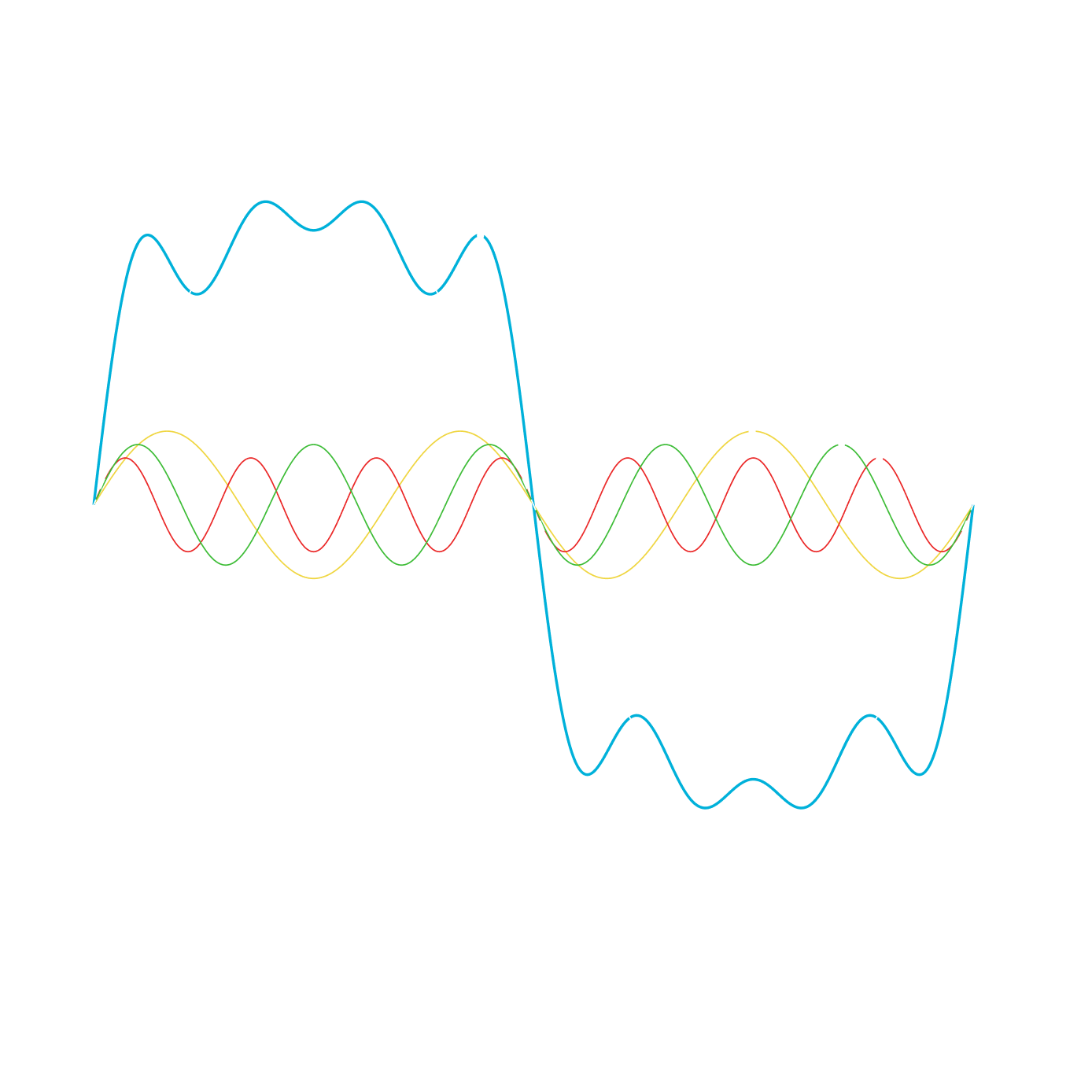
Graph showing four waveforms with different frequencies and amplitudes: one blue with larger amplitude and lower frequency, and three smaller sinusoidal waves in red, green, and yellow overlapping in the middle.

AI causes power oscillations and harmonics

Synchronized AI clusters cause sharp power oscillations that amplify harmonics and increase total harmonic distortion. This can cause frequent nuisance breaker trips, or if not properly managed, physical damage to onsite generation assets and grid infrastructure.
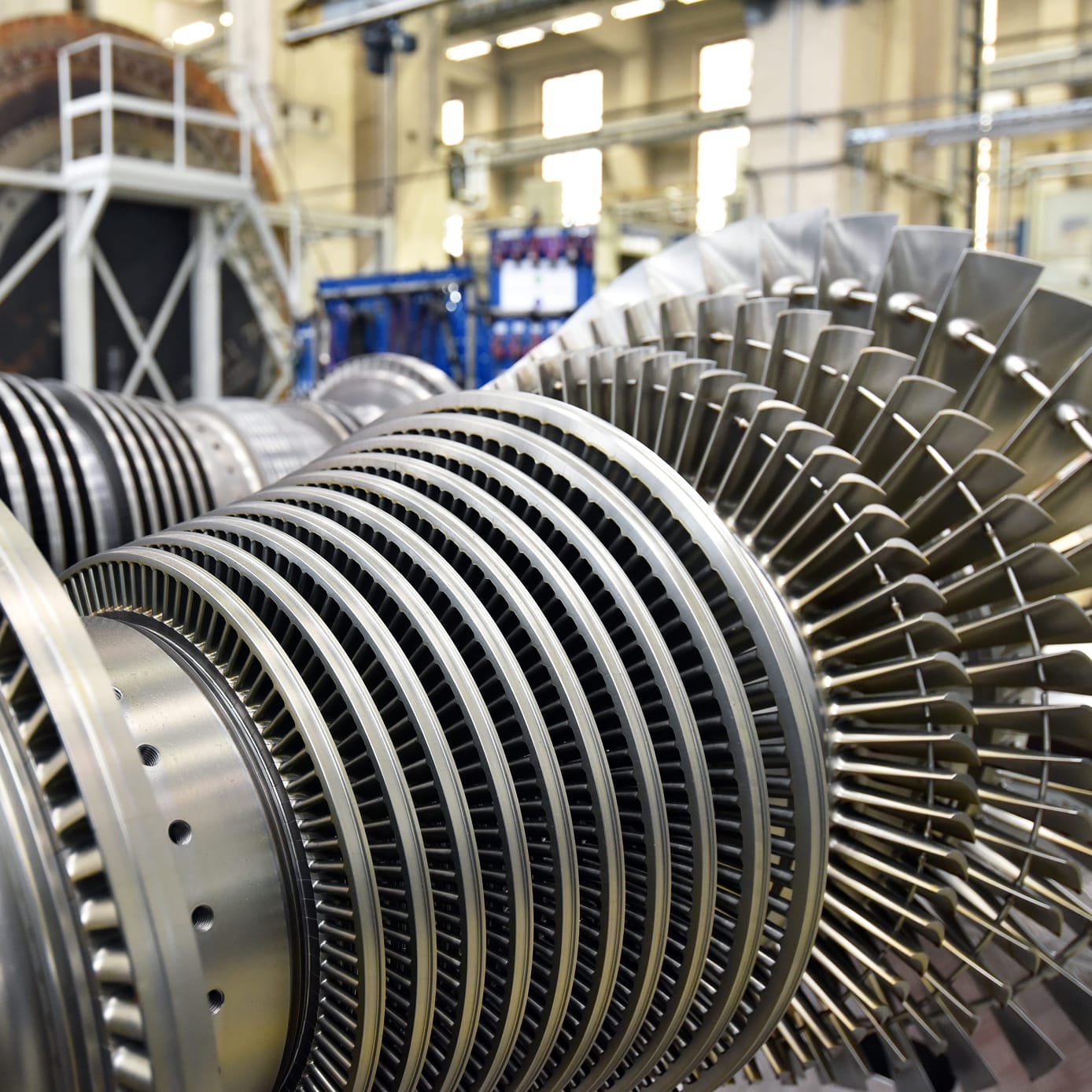
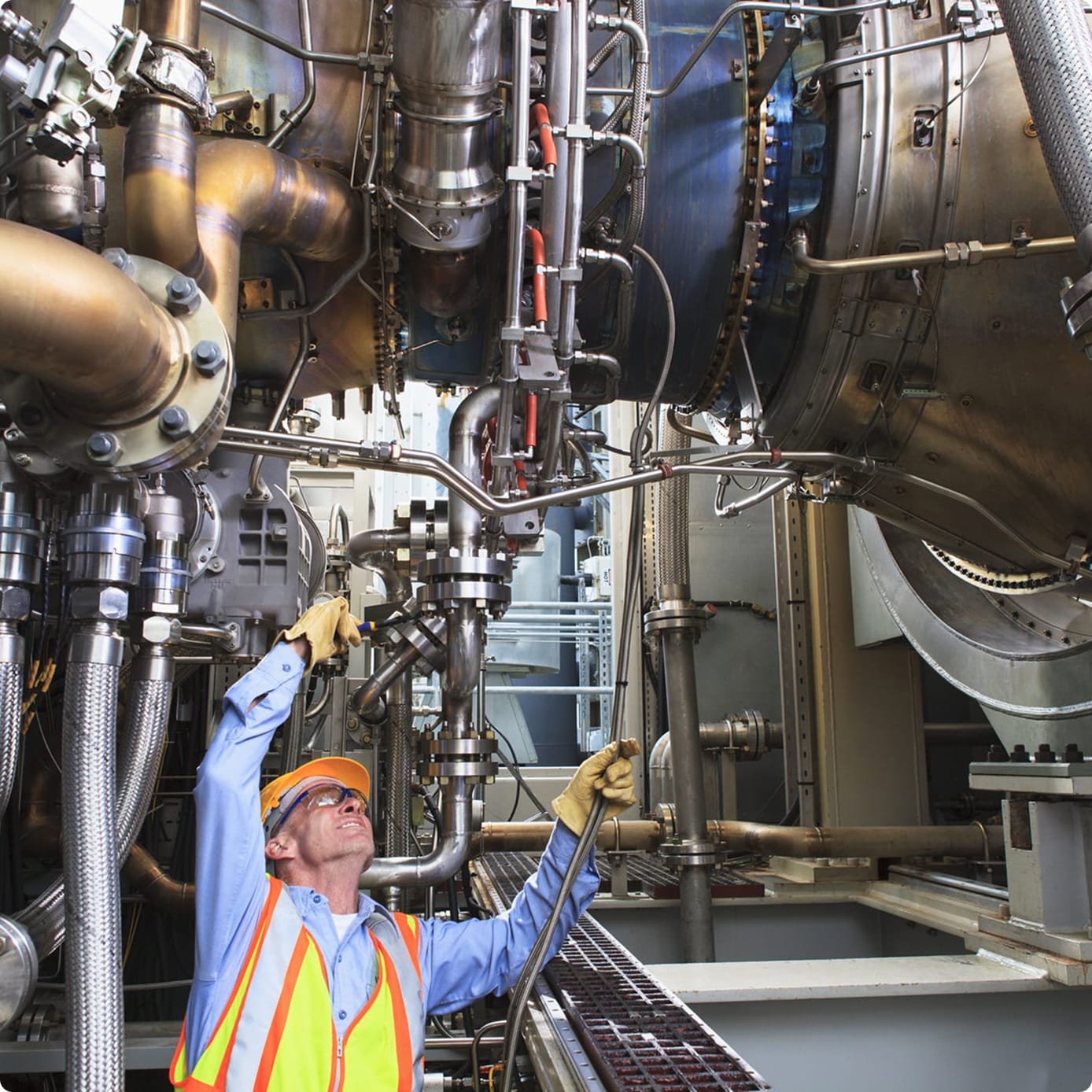
Engineer in safety gear inspecting and adjusting industrial pipes and machinery in a turbine room.

Large turbine systems amplify harmonics

Centralized electrical architectures made up of large turbines tend to further amplify triplen harmonics with long electrical paths and shared neutrals and are susceptible to breakage when subjected to harmonics and aggressive transients.
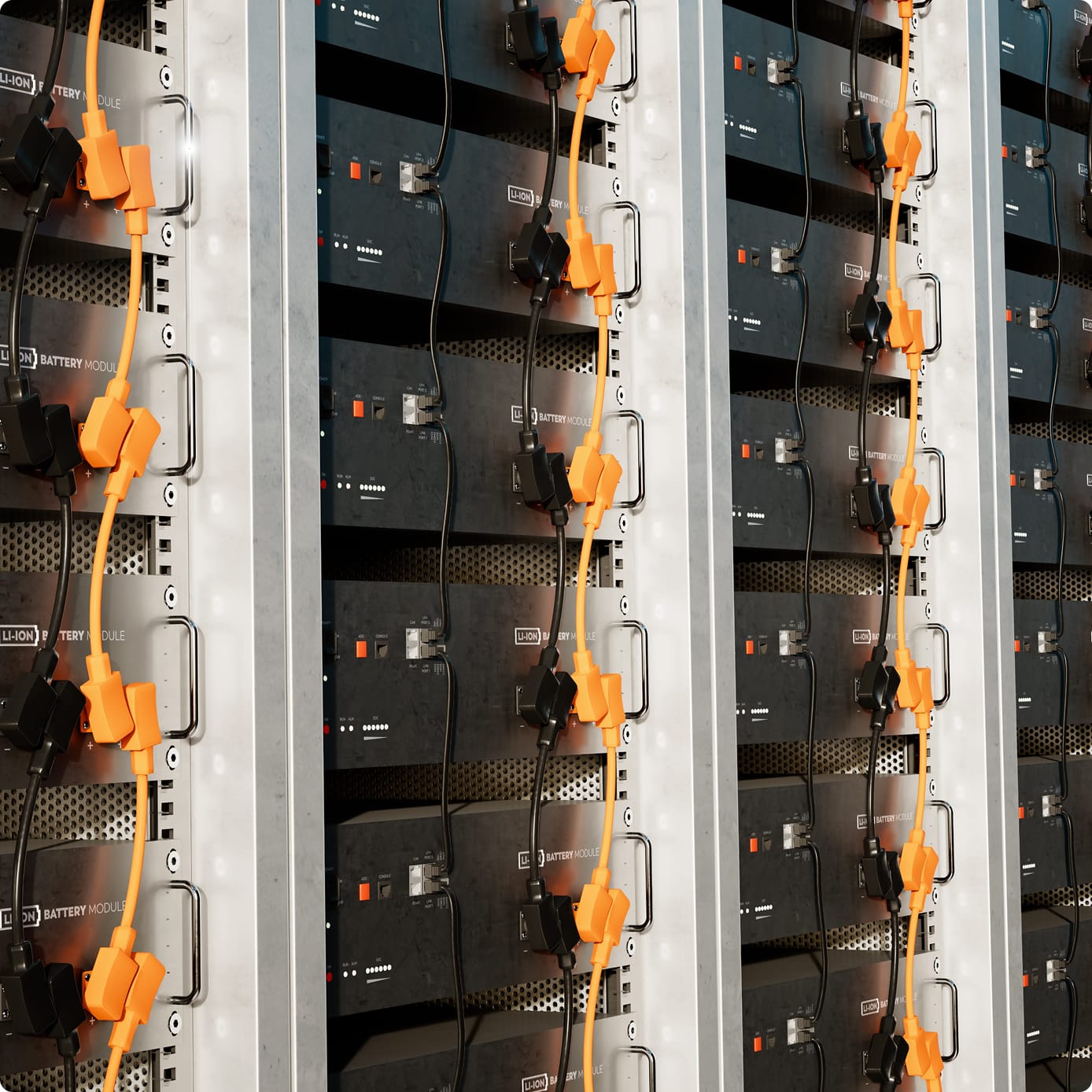
Rows of connected black and orange cables plugged into black lithium-ion battery modules in a metal rack.

Energy storage can help stabilize power

Batteries and supercapacitors can provide harmonic filtering and transient voltage stabilization, but current placement strategies involve notable trade-offs. Rack-level designs offer strong local performance but are costly. Upstream BESS provide bulk capacitance but increase the electrical failure domain, construction time, capital expense and supply chain risk.
Built for the AI Era
AI changed the power equation, demanding a precise combination of responsiveness, scalability, and reliability that legacy infrastructure wasn’t built to deliver. We set out to engineer the solution.
The result is a high-speed generator and hybrid battery system that delivers gigawatt-scale power with the real-time stabilization required to absorb large-scale AI power swings.

Turbocharger-based generation delivers rapid response time

800VDC or AC output, hybrid architecture with integrated battery storage option

Modular design with small failure domain scales with IT loads

Close-Coupled Power Delivery

TurboCell integrates high-speed generation with battery storage in a close-coupled architecture.
Skid-mounted deployment adjacent to the data hall
Real-time power stabilization without consuming compute space or sacrificing overall reliability
Lower cost, faster builds with robust support for AI-driven load volatility
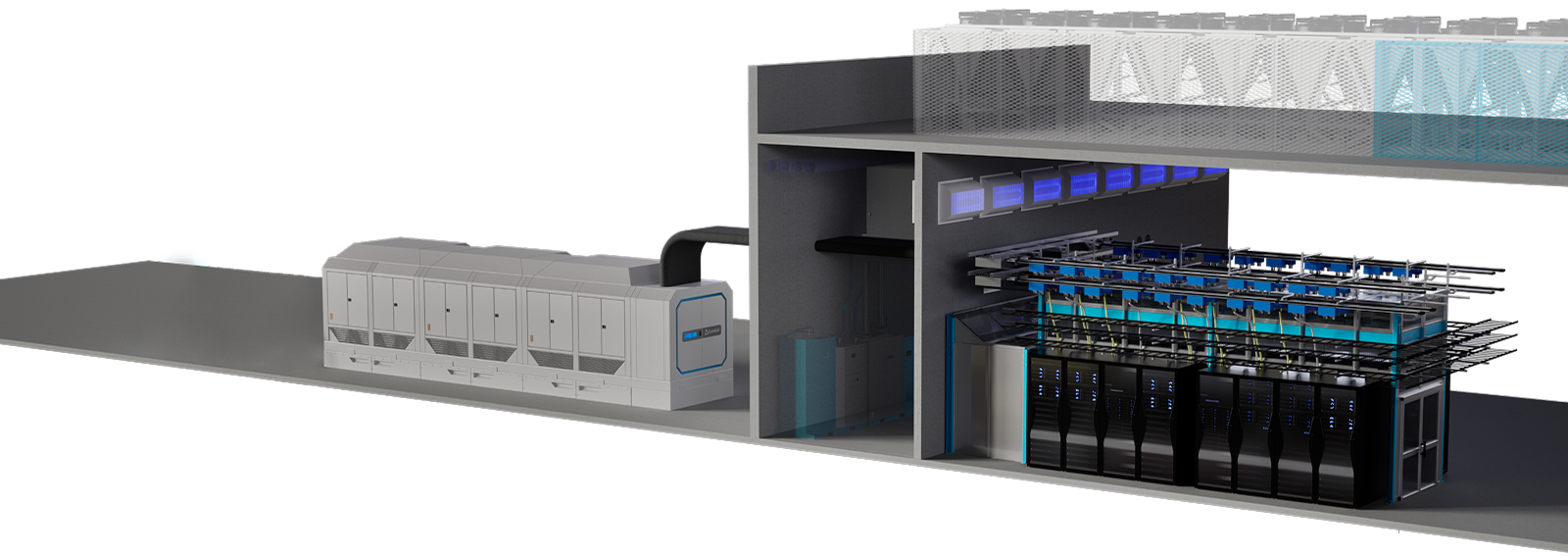
Cutaway 3D rendering of a data center showing rows of black server racks, overhead cable trays, ventilation units, and cooling equipment inside the facility.

Rapid Deployment

Simplified modular oneline scales incrementally with IT load, accelerating time to first token.

Peak Reduction

TurboCell solutions reduce peak demand by up to 30% using energy buffering and controlled ramping.

Power Quality

Maximizes GPU performance and protects against component failure by stabilizing transients and harmonics at the source.

Space Efficiency

Preserves valuable rack space, allowing more room for compute hardware essential to AI factory economics.